
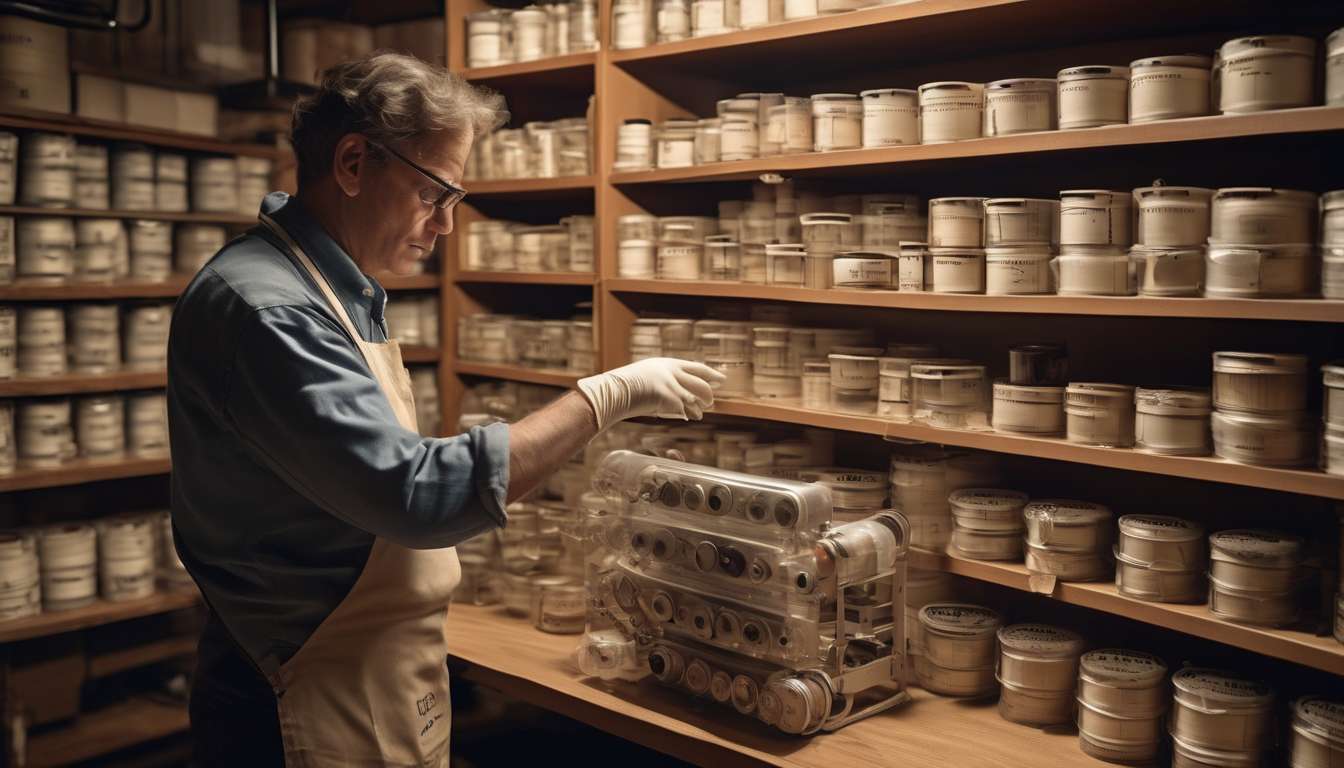
Ever since we discovered that silent-era nitrate prints sometimes coexist with early erotic reels in the same vaults, we’ve been rethinking how adult cinema fits into broader preservation practices.
We approach licensing and archiving not as niche concerns but as part of the same cultural stewardship that saves mainstream film, photography, and performance recordings.
As archivists, rights holders, and scholars, we wrestle with legal restrictions, privacy considerations, and market forces while preserving works that shaped sexual expression and social histories.
- Legal restrictions: navigate varying statutes and copyright terms.
- Privacy considerations: manage consent, anonymity, and the rights of participants.
- Market forces: account for commercial demand, platform policies, and stigmatization.
By connecting adult film preservation to museum best practices and digital humanities workflows, we find shared solutions:
- Standardized metadata to improve discoverability and provenance tracking.
- Layered access controls to balance research needs with privacy and legal concerns.
- Ethical review processes to assess risk, consent, and appropriate use.
Together we must navigate patchwork statutes, consent complexities, and platform policies, balancing access and protection.
Our aim is to map pathways that honor creators, respect subjects, and ensure these materials endure for research, context, and a fuller understanding of twentieth- and twenty-first-century visual culture.
Legal Frameworks
Legal frameworks and governance.
We outline the legal frameworks that govern licensing, ownership, and distribution of adult-film archives to clarify what institutions and rights-holders can and must do. This includes applicable copyright law, contract obligations, privacy and publicity rights, and any sector-specific regulations.
Shared responsibility and partnerships.
We acknowledge shared responsibility: institutions, archivists, and creators work together to ensure lawful stewardship. Collaborative governance models help distribute duties and align incentives.
Clear rights‑clearance processes.
We focus on clear processes for rights clearance so materials can be preserved without exposing organizations to liability.
- Establish procedures to identify rights-holders and obtain licenses or releases.
- Define escalation paths for ambiguous ownership or orphan works.
- Maintain documentation of permissions, licenses, and restrictions.
Digital preservation balanced with limits on access.
We prioritize digital preservation policies that balance access with contractual and statutory limits.
- Preserve high-quality masters and derivative copies with appropriate access controls.
- Implement technical measures (authentication, watermarking, access logs) to enforce restrictions.
- Use tiered access (closed, restricted, research-only, public) matched to legal and contractual terms.
Provenance, permissions, and ethical reuse.
We document provenance and permissions to support ethical reuse and to demonstrate due diligence in stewardship.
- Record chain of custody, source information, and any transfer or licensing agreements.
- Note consent, privacy constraints, and terms that affect reuse or dissemination.
Standardized metadata and privacy protections.
We advocate for standardized metadata interoperability to make records discoverable across collections while preserving privacy and consent terms.
- Adopt common schemas and controlled vocabularies for technical, descriptive, and rights metadata.
- Include machine-readable rights statements and flags for sensitive content.
- Mask or redact personally identifying information where required or requested.
Institution-wide licensing and access protocols.
We recommend institution-wide licensing protocols that spell out permissible uses, embargoes, and takedown procedures.
- Create template licenses and consent forms aligned with legal counsel.
- Define embargo lengths, permitted research uses, and public-facing conditions.
- Establish clear takedown and dispute resolution procedures.
Collaborative custody and complex ownership solutions.
We encourage collaborative agreements for joint custody or restricted access when ownership is complex.
- Use memoranda of understanding (MOUs) or custodial agreements to clarify responsibilities.
- Consider joint stewardship models, revenue-sharing clauses, or escrowed access arrangements.
Transparent recordkeeping and ongoing legal review.
We commit to transparent recordkeeping and regular legal review, so our community feels secure collaborating, sharing expertise, and sustaining these archives responsibly for future research and cultural memory.
- Maintain auditable records of decisions, licenses, and access events.
- Schedule periodic legal and policy reviews to respond to changes in law or practice.
Copyright Challenges
Many adult-film archives face complex copyright challenges that require navigating unclear ownership, expired or transferred rights, and conflicting territorial laws.
We often encounter materials with murky provenance, so we collaborate closely—sharing expertise and documents—to pursue rights clearance efficiently.
We balance preserving cultural memory with managing legal risk by using clear workflows that document permissions, restrictions, and takedown procedures.
We invest in digital preservation strategies that reduce deterioration and provide traceable evidence of custody and access conditions.
Our community prioritizes metadata interoperability so records travel with items across platforms and institutions, making licensing status understandable to partners.
When statutory exceptions don’t apply, we pursue several options:
- Negotiate limited-use agreements.
- Seek collective licensing solutions.
- Pursue orphan works determinations where appropriate.
We recognize that consistent practices build trust:
- Standardize consent-based documentation.
- Standardize licensing metadata fields.
- Maintain audit trails.
Together, these measures strengthen our shared ability to steward collections responsibly while keeping access and preservation aligned with legal realities.
Consent and Privacy
Consent and privacy are central concerns for us, so we proactively document consent, limit personally identifiable information, and implement access controls that respect performers’ ongoing autonomy.
We treat consent as living documentation. Agreements, revocations, and contextual notes get recorded alongside digital preservation actions so future custodians see intent and limitations.
We prioritize rights-clearance pathways that acknowledge performers’ dignity. Permissions explicitly cover intended uses and withdrawal procedures.
We balance community inclusion with risk reduction by minimizing unnecessary personal data and encrypting sensitive files.
Our systems support role-based access and audit trails, so contributors feel safe joining and staying connected.
We design workflows that enable metadata interoperability without exposing identities.
- Use controlled vocabularies.
- Use pseudonymous identifiers where appropriate.
When disputes or changes arise, we engage collaboratively, seeking restorative solutions that honor relationships and legal obligations.
By centering consent and privacy, we build archives that are trustworthy, inclusive, and resilient for everyone involved.
Metadata Standards
We adopt clear, consistent metadata standards so archivists and stakeholders can reliably describe, discover, and manage adult film materials while protecting sensitive information.
We define mandatory fields for:
- title
- creators
- production dates
- rights clearance status
- consent metadata
We add controlled vocabularies for:
- genres
- formats
- subjects
We document provenance, technical specifications, and preservation actions to support long-term digital preservation and to make handoffs between teams smooth.
We commit to metadata interoperability by mapping our schema to established standards (Dublin Core, PREMIS) and to industry-specific extensions, so partners can share records without losing context.
We include access-relevant notes without exposing private data, balancing transparency with care.
We regularly review and update templates based on:
- community feedback
- legal shifts
- technological change
By keeping metadata precise, auditable, and interoperable, we build a trusted archive that honors creators, performers, and users while ensuring materials remain discoverable and responsibly managed.
Access Controls
Tiered access controls tied to role, consent, and law.
We’ll implement tiered access controls that restrict who can view, copy, or modify materials based on role, consent terms, and legal requirements.
Clear role definitions to build inclusion and trust.
We’ll create clear role definitions so teammates, contributors, and community researchers feel included and trusted.
Permissions linked to rights‑clearance records.
Our access model ties permissions to rights clearance records, ensuring only authorized use aligns with contracts and contributor agreements.
Metadata interoperability so permissions travel with files.
We’ll integrate access decisions with metadata interoperability standards so permissions travel with files across systems and repositories.
- This reduces duplication.
- This prevents accidental exposure.
- This supports consistent audit trails.
Comprehensive logging and community-facing transparency.
We’ll log all access and changes for accountability, and we’ll provide community-facing dashboards that show who can see what, why, and for how long.
Request workflows that respect contributors.
We’ll support request workflows for restricted items, letting users explain purpose and demonstrating respect for contributors.
Encryption and secure authentication for sensitive holdings.
We’ll adopt encryption and secure authentication for sensitive holdings, balancing protection with the community’s desire to participate in digital preservation.
Regular policy review and adaptation.
We’ll review policies regularly, adapting as laws, technologies, and community expectations evolve.
Digitization Practices
We will establish standardized digitization practices that prioritize fidelity, ethical consent, and long-term accessibility while minimizing harm to people and materials.
We will agree on clear scanning and encoding standards so source materials are faithfully captured and future-proofed for digital preservation.
We will coordinate rights clearance early, documenting permissions and restrictions to avoid surprises downstream.
We will use consistent metadata schemas to enable discovery and interoperability across institutions, so neighbors and newcomers can find and trust our collections.
We will keep workflows transparent and collaborative, sharing tools and training so everyone involved feels competent and included.
We will balance technical rigor with care for fragile media, minimizing handling and using tested conservation-friendly methods.
We will version and checksum master files, maintain secure backups, and plan migrations to prevent obsolescence.
We will establish minimal, uniform access derivatives to respect permissions while enabling research and community use.
Together, we will build a digitization program that’s responsible, inclusive, and resilient, honoring both the material and the communities connected to it.
Ethical Review
We will establish a formal ethical review process to evaluate consent, privacy, potential harms, and community impacts before any materials are digitized or made accessible.
We will convene a diverse review panel that includes archivists, legal counsel, community representatives, and ethics scholars so everyone feels seen and responsible for outcomes.
We will require documented rights clearance and verifiable consent as prerequisites; items with unresolved claims will be flagged for restricted handling.
We will assess risks to subjects, descendants, and communities, balancing access with dignity and safety.
We will set procedures for cases where full disclosure isn’t appropriate, including:
- anonymization,
- takedown,
- contextual notes explaining limitations or sensitivities.
We will embed ethical metadata in our interoperability strategy so provenance, permissions, and restrictions travel with files across systems.
We will log review rationales and revisit them periodically to reflect evolving norms.
We will train staff to apply standards consistently and to listen to affected communities.
We will make our ethical criteria transparent so contributors and users know we are committed to respectful, accountable digital preservation that honors shared stewardship and mutual trust.
Collaborative Stewardship
Partnerships and shared stewardship
We’ll partner with creators, rights-holders, community groups, and peer institutions to share responsibility, expertise, and resources for stewarding sensitive adult material.
We’ll build working groups that balance creators’ autonomy with institutional standards so everyone feels heard and accountable.
We’ll establish clear workflows for rights clearance, document consent histories, and set transparent access rules that reflect community norms.
Technical coordination for long-term access
We’ll coordinate technical efforts for digital preservation, adopting shared storage strategies, checksums, and format migration plans to keep materials accessible over time.
We’ll create interoperable metadata schemas and promote metadata interoperability across platforms so collections can be discovered and responsibly linked.
Support, training, and wellbeing
We’ll offer reciprocal training, legal guidance, and emotional-support resources for staff and contributors who handle sensitive content.
Ongoing review and community governance
We’ll set regular review cycles to reassess policies as norms evolve, and we’ll invite community input to ensure stewardship stays inclusive and trustworthy.
By pooling skills and authority, we’ll sustain archives that respect creators, protect participants, and serve communities with integrity.
How do adult archives handle content moderation and community reporting for user-submitted materials?
We moderate user-submitted materials through clear guidelines, proactive review, and community reporting tools.
We train moderators and use automated filters to catch violations, then we triage reports quickly and transparently.
We notify submitters, offer appeal paths, and remove content that harms people or breaks rules.
We foster respectful belonging by responding empathetically, publishing takedown stats, and continuously refining policies with community feedback to keep the space safe.
What strategies are used to secure funding and ensure long-term financial sustainability for adult film preservation projects?
We’re asking how we secure funding and sustain preservation projects long-term.
We’ll diversify income streams.
- Grants
- Institutional partnerships
- Memberships
- Donations
- Earned revenue (licensing, merchandise)
We’ll build recurring-support mechanisms and short-term campaigns.
- Recurring-support programs (monthly members, patrons)
- Crowdfunding campaigns for specific projects
We’ll emphasize transparency and community benefits.
- Clear reporting on funds and outcomes
- Communicating community impact to retain and grow support
We’ll seek long-term financial stability.
- Endowments or reserve funds
- Financial policies for sustainability
We’ll collaborate with educational and cultural institutions.
- Partnerships with universities and museums for shared resources
- Joint research, staffing, and infrastructure agreements
We’ll continuously demonstrate impact to retain backers and grow stewardship together.
- Regular impact assessments and stories of preservation outcomes
- Engaging supporters in stewardship activities and decision‑making
How do archives manage international collaborations when partners have conflicting cultural norms about adult content?
We acknowledge the Current Question and handle international collaborations with care and respect.
We set clear agreements defining access, distribution, and content handling that honor partners’ norms.
We create compartmentalized workflows, use geo-restrictions and consent-based permissions, and offer contextual metadata and trigger warnings.
We prioritize transparent communication, mutual learning, and shared stewardship so every collaborator feels valued, safe, and confident in our joint preservation work.
Conclusion
You’ve seen how adult movie archives sit at the crossroads of law, technology and ethics.
You’ll need to balance copyright, consent and privacy while adopting consistent metadata, access controls and digitization practices.
You’ll want transparent licensing, robust consent verification, and preservation strategies that respect subjects and users.
By engaging ethical review and collaborative stewardship with rights holders, communities and institutions, you’ll preserve cultural materials responsibly while minimizing legal risk and protecting individual dignity.