
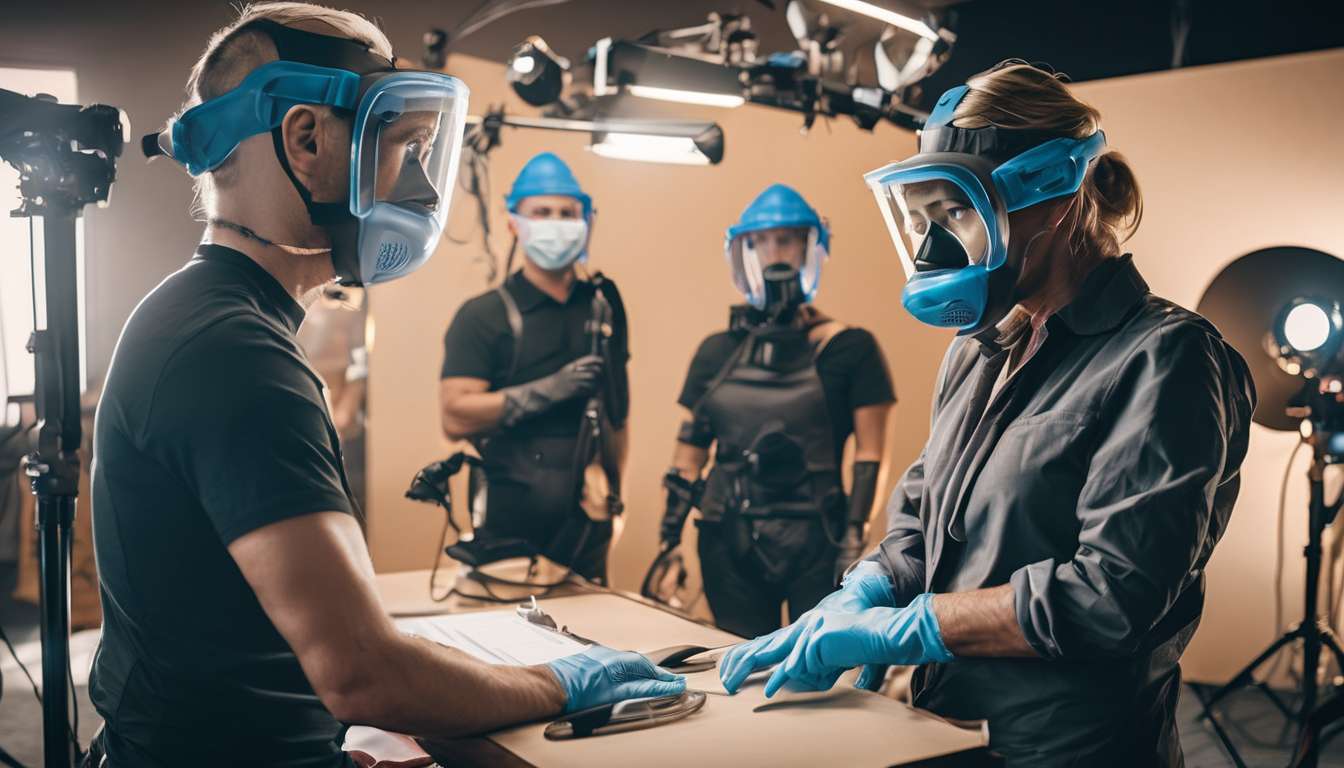
Change is overdue: adult movie studios face a pressing problem that demands immediate, coordinated action.
We have long tolerated production environments where safety protocols are inconsistent, performers shoulder disproportionate risks, and industry standards vary wildly across companies and regions.
These problems are not isolated — fragmentation endangers health and well-being and undermines professional credibility and business sustainability.
As studios, producers, and crew, we must confront specific gaps in current practice:
- Testing — inconsistent or inadequate testing regimes put everyone at risk.
- Consent procedures — consent must be clear, informed, and documented for every scene and performer.
- On-set medical support — immediate access to trained medical personnel and emergency protocols is essential.
- Training — performers and staff need standardized training in safety, boundaries, and harm reduction.
Addressing these shortcomings requires concrete changes:
- Transparent policies that are shared across companies and consistently enforced.
- Investment in protective resources such as testing, PPE where appropriate, and medical staffing.
- Cultural shift toward shared accountability so responsibility for safety is distributed and recognized.
We cannot rely on ad hoc fixes or market forces alone.
Instead, we need deliberate strategies, measurable benchmarks, and collaborative frameworks that center the dignity and safety of everyone involved in production.
Only by recognizing the problem clearly can we mobilize effective solutions and rebuild trust within and beyond the industry.
Industry Safety Baselines
On-set health screenings, consent procedures, and protective practices
We establish clear minimum standards for on-set health screenings, consent procedures, and protective practices to keep performers and crew safe.
Occupational safety expectations for every shoot
We set occupational safety expectations that apply to every shoot, so everyone knows what’s required and nobody’s left guessing.
Explicit, documented, and revisitable consent protocols
We adopt consent protocols that are explicit, documented, and revisited whenever scenes change, and we make sure everyone can voice limits without fear of retaliation.
Access to on-set medical care and trained personnel
We provide access to on-set medical care and trained personnel, ensuring issues are addressed immediately and discreetly.
Culture of welcomed reporting and swift action
We build a culture where reporting hazards is welcomed and swiftly acted on, because belonging grows when people see their concerns matter.
Standardized incident reporting, PPE, and rest breaks
We standardize incident reporting, PPE availability, and rest breaks, balancing efficiency with humane working conditions.
Transparent communication about safety and role-specific requirements
We commit to transparent communication about safety updates and role-specific requirements, so crew and performers feel informed and respected.
Ongoing review with community input
We continually review baseline practices with community input, keeping standards realistic, enforceable, and responsive to the needs of those who make our productions possible.
Standardized Testing Protocols
Standardized testing protocols
We will specify required tests, frequency, acceptable labs, turnaround times, and procedures for handling positive results.
- Define which tests are required and how often they must be administered.
- Identify and approve acceptable laboratory partners.
- Set maximum turnaround times for results.
- Establish clear procedures for responding to positive results.
We will create uniform steps for scheduling, result-sharing, and confidentiality.
- Who schedules tests and how scheduling is communicated.
- How and to whom results are shared.
- Measures to preserve confidentiality and data security.
We will align protocols with occupational safety standards and coordinate with qualified labs to ensure fast, reliable results.
- Ensure protocols meet applicable occupational safety and public-health regulations.
- Coordinate with labs to minimize delays so productions can proceed without unnecessary disruption.
Training and consent integration
We will train coordinators and performers on testing procedures, consent protocols, and on-set medical care.
- Training for coordinators on logistics, reporting, and recordkeeping.
- Training for performers on what to expect, how consent is obtained, and their rights.
- Ensure on-set medical staff understand testing workflows and follow-up steps.
Contingency planning for positive results
We will document follow-up care, temporary reassignment options, and communication plans that minimize stigma.
- Medical follow-up and referral pathways.
- Temporary reassignment or isolation procedures to preserve employment and income when possible.
- Transparent, respectful communication plans that reduce stigma.
Ongoing review and auditing
We will regularly review test panels and frequencies based on epidemiology and community feedback, and audit lab partners for compliance.
- Periodic review of which tests are used and how often, informed by current epidemiology.
- Solicit and incorporate community feedback on testing practices.
- Audit lab partners for quality, turnaround time, and data handling compliance.
Outcome
By adopting consistent, community-driven testing practices, we will strengthen trust, reduce risk, and make safer production an everyday expectation.
Clear Consent Frameworks
We’ll establish a clear, enforceable consent framework. This framework will define who can consent to which activities, how consent is documented and withdrawn, and the protections performers have during and after shoots.
We’ll make consent protocols a shared language. Every cast and crew member will feel included, respected, and confident that their boundaries matter.
We’ll require documented, time-stamped consent specific to scenes and activities. There will be easy procedures for modifying or revoking consent without stigma or retaliation.
We’ll train teams to recognize verbal and nonverbal cues. Training will help staff identify discomfort and respond appropriately.
We’ll appoint consent officers on set. Consent officers will have the authority to pause work if concerns arise.
We’ll integrate consent protocols with occupational safety plans. Behavioral boundaries and physical safety measures will reinforce one another.
We’ll record consent reviews before each scene and keep secure records accessible to performers. Records will be maintained with privacy and security safeguards.
We’ll coordinate with on-set medical care personnel to respect medical privacy. Consent changes must be honored during any health interventions.
Together, we’ll build a culture where consent is active, continuous, and central to belonging and safety.
On-Set Medical Coverage
We will provide licensed medical professionals on set for every shoot, with a clearly defined scope of practice, emergency protocols, and confidential channels for performers to request care.
We will ensure on-set medical care is visible, accessible, and respected as part of our commitment to occupational safety and emotional well-being.
We will coordinate medical staffing with producers so every call for care is timely and private, reinforcing trust among performers, crew, and leadership.
We will document consent protocols alongside medical availability so performers know they can pause scenes without penalty for health reasons.
We will maintain secure records and anonymized reporting to track incidents and improvements, and invite community input on policies.
We will review equipment, first-aid supplies, and transfer plans to local emergency services before shoots, and we will brief everyone on when and how to engage medical staff.
By centering on-set medical care within operational planning, we will foster a culture where safety and consent are mutual responsibilities, and where everyone feels they belong and can rely on support when needed.
Performer and Crew Training
We will provide comprehensive, regular training for performers and crew that covers safety procedures, communication skills, emergency response, and respectful boundary enforcement.
We create a clear curriculum that ties occupational safety to everyday practices, so everyone knows how to prevent injury and report hazards without fear.
We train on consent protocols as a living standard:
- How to obtain consent.
- How to confirm and revisit consent.
- How to pause action if someone feels unsafe.
We practice verbal and nonverbal check-ins, de-escalation, and role-specific responsibilities, so trust builds across departments.
We include scenario-based drills that reinforce coordinated responses and familiarity with on-set medical care pathways, so people can act quickly and support each other until professionals arrive.
We encourage peer mentorship and anonymous feedback loops, so newcomers feel welcomed and experienced staff feel empowered to lead.
By standardizing training and normalizing ongoing learning, we foster a culture where belonging and safety go hand in hand, and everyone shares responsibility for a safer, more respectful workplace.
Protective Equipment & Resources
We provide and maintain appropriate protective equipment and readily accessible resources so performers and crew can prevent injury and respond immediately when incidents occur.
We stock condoms, barrier tools, supportive braces, discreet padding, and cleanup supplies, and we inspect and replace items regularly.
Our approach treats safety as a shared responsibility:
- Everyone has access to clear guidance that ties equipment use to occupational safety.
- Guidance also connects equipment use to the consent protocols we’ve agreed on.
We make on‑set medical care visible and nonjudgmental — first‑aid kits, AEDs, and trained responders are on site, and we post contact steps for emergencies.
We keep resource lists for follow‑up care:
- Sexual‑health clinics
- Mental‑health support
- Ergonomic consultations
We cultivate a respectful environment where asking for equipment or medical attention is welcomed, not penalized.
That practical support helps reduce risk and keeps our productions humane, professional, and resilient.
Accountability and Reporting
Accountability for safety
We hold everyone accountable for safety by maintaining clear reporting channels, prompt incident investigation, and protections against retaliation.
Accessible, confidential reporting
We make reporting accessible and confidential so anyone can raise concerns about occupational safety, consent protocols, or needs for on-set medical care without fear.
Prompt investigation and shared learning
We investigate promptly, involve affected people, document findings, and share lessons learned with our community to prevent recurrence.
Enforcement with support
We enforce standards through clear consequences and support:
- Corrective training
- Policy updates
- Personnel changes when needed
Data-driven improvement
We track trends and metrics to prioritize improvements and allocate resources where they’ll most reduce risk.
Community voice and belonging
We offer regular forums where performers and crew can voice observations and propose fixes, because belonging means our voices shape practice.
Transparency while protecting privacy
We publish aggregated reports that respect privacy but show our commitment to transparency and continuous improvement.
Compassionate incident response
When incidents occur, we respond compassionately, ensure appropriate medical care, and follow up to restore trust and strengthen protections across every production.
Collaborative Oversight Models
We will build collaborative oversight models that bring performers, producers, medical professionals, and advocates together to set standards, monitor compliance, and continuously improve on‑set safety.
We will create standing committees where every voice matters, sharing responsibility for occupational safety and transparent enforcement.
We will codify consent protocols developed jointly with performers and advocates, so boundaries are respected and revisited before each scene.
We will require trained mediators on call to resolve concerns quickly and fairly, reducing fear of retaliation and strengthening trust.
We will integrate on‑set medical care into oversight with licensed clinicians participating in planning, emergency response, and post‑shoot follow‑up.
We will run regular audits that include:
- anonymous feedback,
- incident reviews, and
- measurable corrective steps.
We will publish aggregated compliance reports to the community so progress is visible and lessons are shared.
We will invest in ongoing training and support, including:
- peer‑support networks,
- clear escalation paths, and
- continuing education for all stakeholders.
Together, we will make the workplace safer, more accountable, and more inclusive—so everyone can belong and work with dignity.
How will these safer production practices affect the availability and release schedules of adult films?
We will prioritize safety even if it shifts release timing.
We’ll plan shoots more carefully — allowing extra time for testing and well-being checks, and staggering schedules to avoid burnout.
That means some releases may take longer, but we’ll communicate timelines transparently and stick to reliable calendars.
We’ll find efficiencies through:
- Preproduction improvements (clearer scripts, shot lists, and logistics),
- Batching shoots to reduce setup/tear-down overhead,
- Flexible postproduction workflows to keep content flowing while protecting staff well-being.
What are the expected cost implications for smaller studios and independent producers, and are there funding or subsidy options?
We expect costs to rise for smaller studios and indies due to testing, PPE, and longer shoots, and we’re concerned about budget squeeze.
We’ll look for funding sources to bridge gaps:
- Grants
- Union relief funds
- Crowdfunding
- Platform advances
We’ll pursue collaborative cost-saving measures:
- Pooled resources
- Shared testing services
- Co-op production models
We’re also open to tax credits or local subsidies where available to keep our creative community viable and included.
How will privacy and data security for performers be maintained when testing, medical records, or consent logs are stored digitally?
We’ll encrypt data at rest and in transit.
We’ll limit access using strong authentication and role-based controls.
We’ll maintain audit trails so we can spot and investigate misuse.
We’ll store only the minimal necessary data and use anonymization where possible.
We’ll obtain clear, informed consent that explains storage, retention, and uses of digital records.
We’ll select vendors who meet strict privacy and security standards.
Conclusion
You’ve seen how studios are raising industry safety baselines, adopting standardized testing, clear consent frameworks, and on-set medical coverage.
You’ll benefit when performers and crew get training, protective equipment, and accessible resources.
With accountability, reporting, and collaborative oversight, productions become safer and more professional.
By supporting these measures, you help normalize responsible practices that protect health, dignity, and careers—making the adult film industry more sustainable, ethical, and resilient for everyone involved.